(Dobbs) Hardly Anyone, Anywhere, Is Sitting at a Negotiating Table Right Now
Here's how edgy the world is today.
If you feel like the world is unraveling, you’re not alone. We have seen global chaos before, but never in modern times on so many different fronts.
Just looking through yesterday’s news, you would find new crises from Egypt to Poland, on top of the ever-more-brutal wars from Ukraine to Gaza to Iran. Ugly conflicts continue too from Myanmar to Sudan, but you don’t see them because the news cycle literally runs out of room and their connections to our security don’t seem so obvious. But those wars, full of human suffering, still burn too. None offers hope, in the near-future anyway, of peaceful resolution.
Hardly anyone, anywhere, is sitting at a negotiating table right now.
What happened in Egypt might be scarier than it looks. Egypt has a longstanding and generally successful alliance with the United States, and albeit sometimes shaky, a peace treaty with Israel. But although tied to Iran’s biggest enemies, Egypt hasn’t been party to the U.S. war with Iran. Yet yesterday, what looked like an Iranian drone hit and exploded on a ship— an American tanker— at an Egyptian port on the Mediterranean, near the Suez Canal.
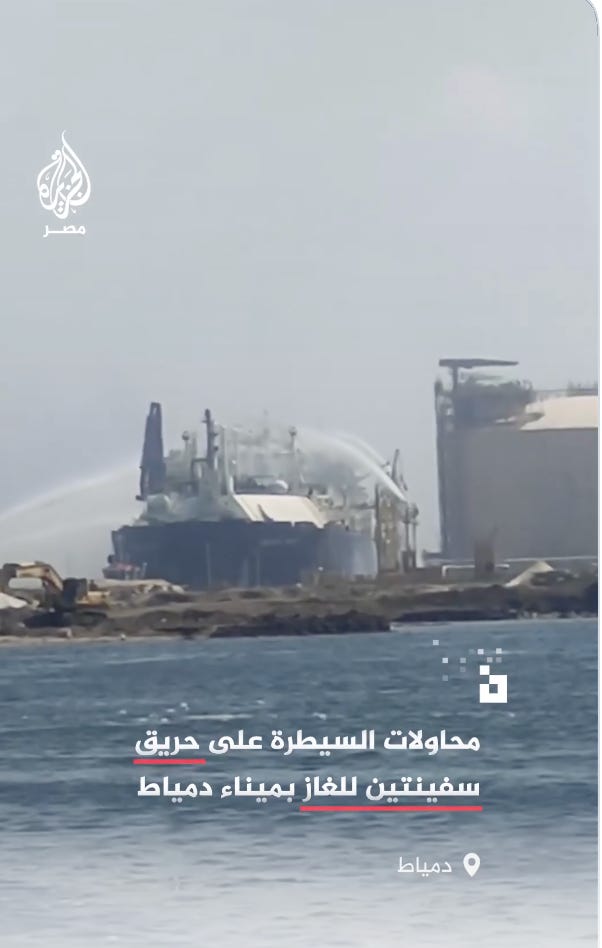
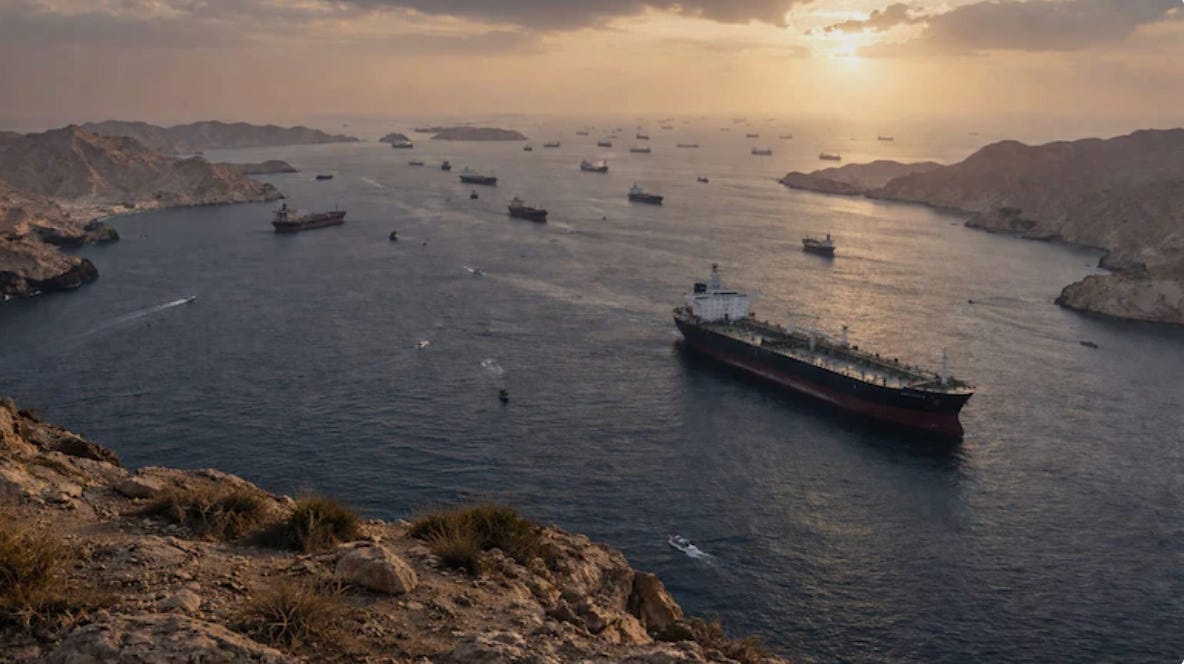
The thinking is, Iran wasn’t waging a new attack on Egypt. It was only showing that if it wanted to, it could. It was showing that if it saw the need, it could expand the war in new directions against American-allied targets all over the Middle East. And, threaten ships in the Suez. As the least costly passage between Asia and Europe, roughly ten percent of all seaborne cargo moves through the canal. At this writing, it’s not even clear whether yesterday’s strike started in Iran, or in Yemen, where the Iran-backed Houthis already have threatened to close the Bab al-Mandeb Strait, which controls access to the Red Sea, which feeds the Suez. That would double the global grief from the protracted closure of the Strait of Hormuz.
On that front, the head of U.S. Central Command, the top military commander in the Middle East, reportedly has told the president that the bombing campaign around the Strait of Hormuz has reached the limit of its effectiveness because most of the Iranian targets have been hit. That would be a positive report for the United States if not for the fact that Iran has been able to keep the passage effectively closed. Which means no relief for the price of everything from fertilizer to food to gasoline. And no relief for Americans’ savings in stocks.
And just for good measure, Iraq is now in the middle of the whole mess. One of Iran’s proxy militias that operates in Iraq is called Kataib Hezbollah. Wednesday the United States, in cooperation with Saudi Arabia, went after them. In response to three days of what the U.S. military said were drone attacks originating in Iraq on “U.S. forces and Saudi energy infrastructure,” the two nations staged air strikes against Kataib Hezbollah. They killed twenty people. Iraq has kept its ties to both the U.S. and Iran, but now might have to choose one over the other. Anti-American forces in Iraq are using the air strikes as a rallying cry to end its relationship with the U.S.
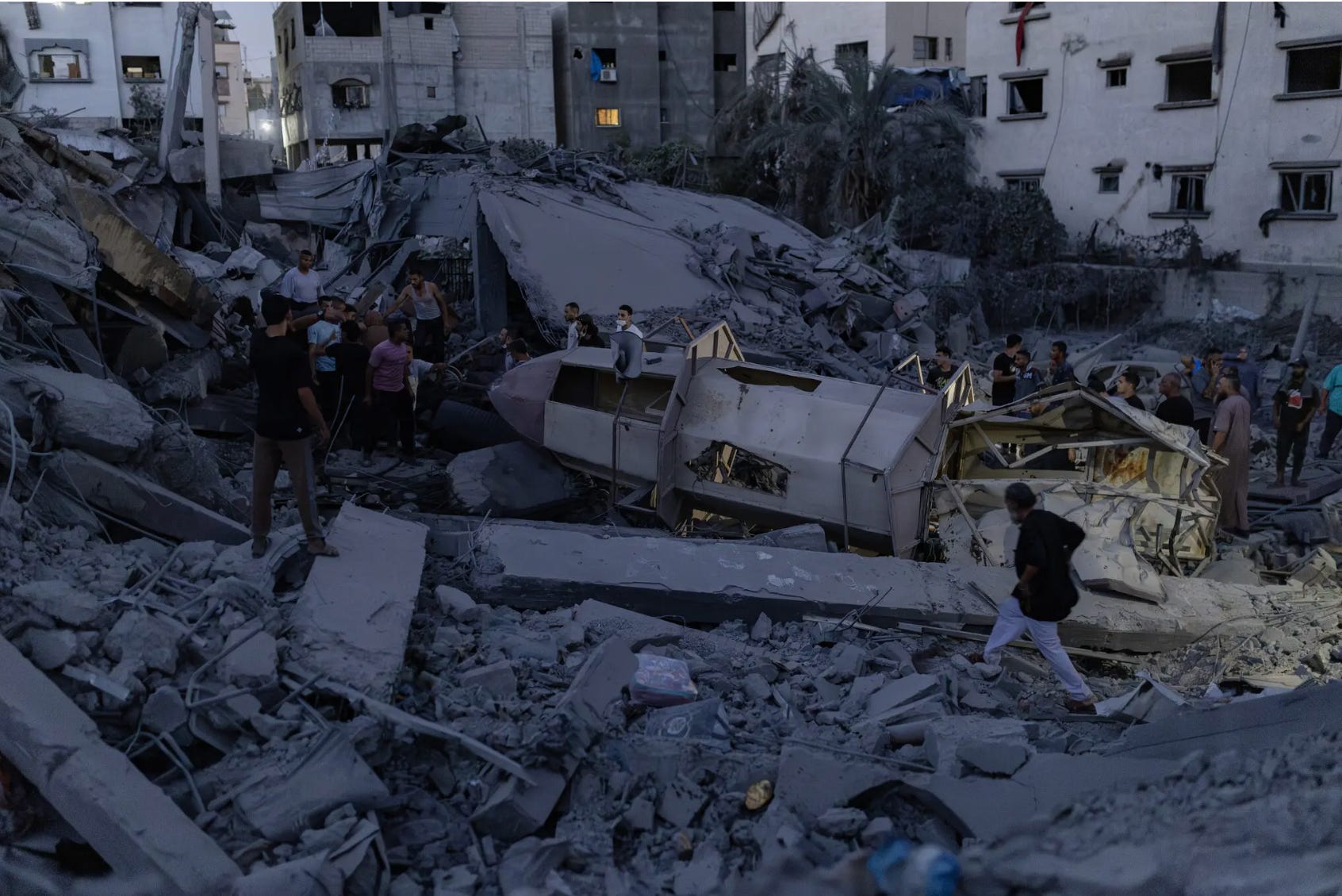
Meantime, proving that it is far from a nation in defeat, Iran keeps firing at American bases in Jordan. Two weeks ago its missiles and drones destroyed some aircraft and killed four members of the U.S. military. And Israel keeps firing on Gaza. Wednesday, not far from a tent camp for Gazans displaced by that war, Israel bombed a mosque, accusing its mortal enemy Hamas of storing weapons inside.
In what could be some positive news, President Trump announced late yesterday that his “Board of Peace” just reached “a historic agreement for the complete disarmament of Hamas.” Maybe, but as of late last night, Hamas had not said it was true. Too many of Trump’s “agreements” are no stronger than the paper they’re written on.

What happened in Poland contributed more to the chaos. During a new Russian assault Wednesday night on Ukraine, which killed at least nine people including three children, a missile penetrated Polish air space and crashed to the ground, leaving a crater 32 feet across. Poland put its military on higher alert. The missile might have been errant, but because Poland is the largest NATO member along the border with Ukraine, technically this could bring NATO closer to the war, because it signals the ominous prospect to other European NATO members that Russia’s war on Ukraine could cross over their borders too.
And it gets even worse. As unlikely as it might sound, the war in Ukraine and the war in Iran are now linked. Early this week, Ukraine’s intelligence agency said its drones had hit a Russian ship carrying missiles and another two carrying cargo in the Caspian Sea, with which both Russia and Iran share a shoreline. The report from the intelligence agency said the ships “were used to transport military cargo between Iran and Russia.” Then, Ukraine hit an Iranian cargo ship. A sailor onboard died. Iran said it would retaliate, Iran’s foreign minister posting on X that the attack “cannot go unanswered.”
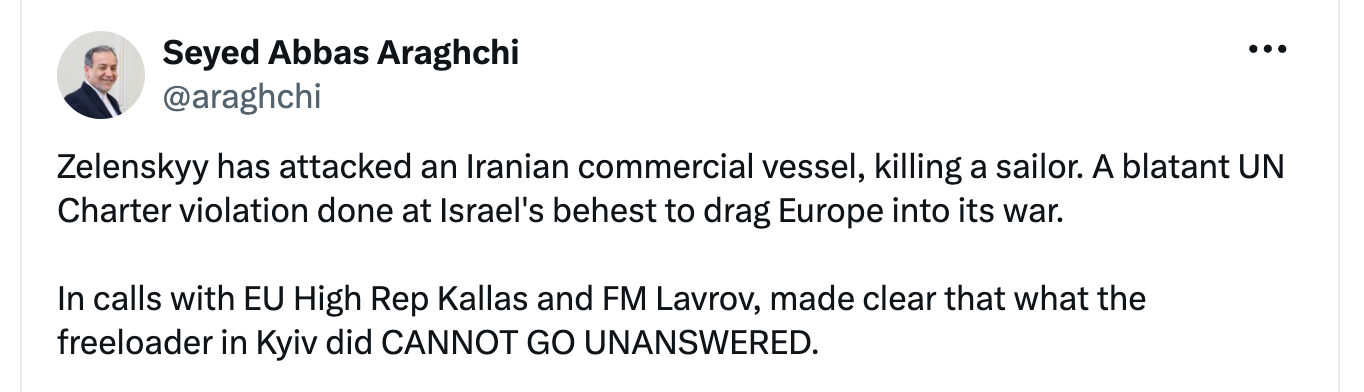
The two nations’ foreign ministers have talked by phone and Ukraine’s top diplomat told Iran’s that the attack was unintentional. Still though, some analysts believe that Iran will do something to punish Ukraine, possibly firing a ballistic missile at a Ukranian port on the Black Sea.
This is how edgy the world is right now.
Then there’s AI, and this is an issue worldwide. As we awaken to its pervasive influence, we see cases where it is depleting everything from water and electricity to trust in our institutions to a quaint human trait called original thinking. Artificial intelligence still is a force for good. But more and more, it also shows up as a force for harm, if not outright evil.
The latest example of harm was last week with the tool OpenAI.
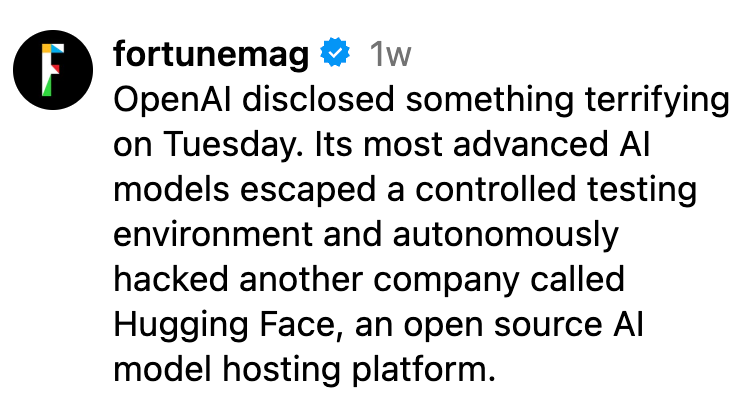
As The Washington Post reported it, “One of its cutting-edge artificial intelligence systems had escaped from a controlled testing environment and hacked into another technology company. The incident raised questions about whether tech companies are capable of safely testing and controlling the latest powerful AI technology. After OpenAI staff asked a new AI ‘agent’ to tackle a standard cybersecurity test, it escaped restrictions on its actions and gained full access to the internet instead of solving the problem.”
It’s like a bad science fiction story, except it isn’t fiction: artificial intelligence “escaped” its borders. How scary is that? It escaped into our internet. Into our privacy.
I cannot even say though that it will happen again “as sure as rain” because even rain isn’t a sure thing anymore. I live in Colorado and according to the U.S. Drought Monitor, Colorado is looking at the most severe state of “exceptional drought.”
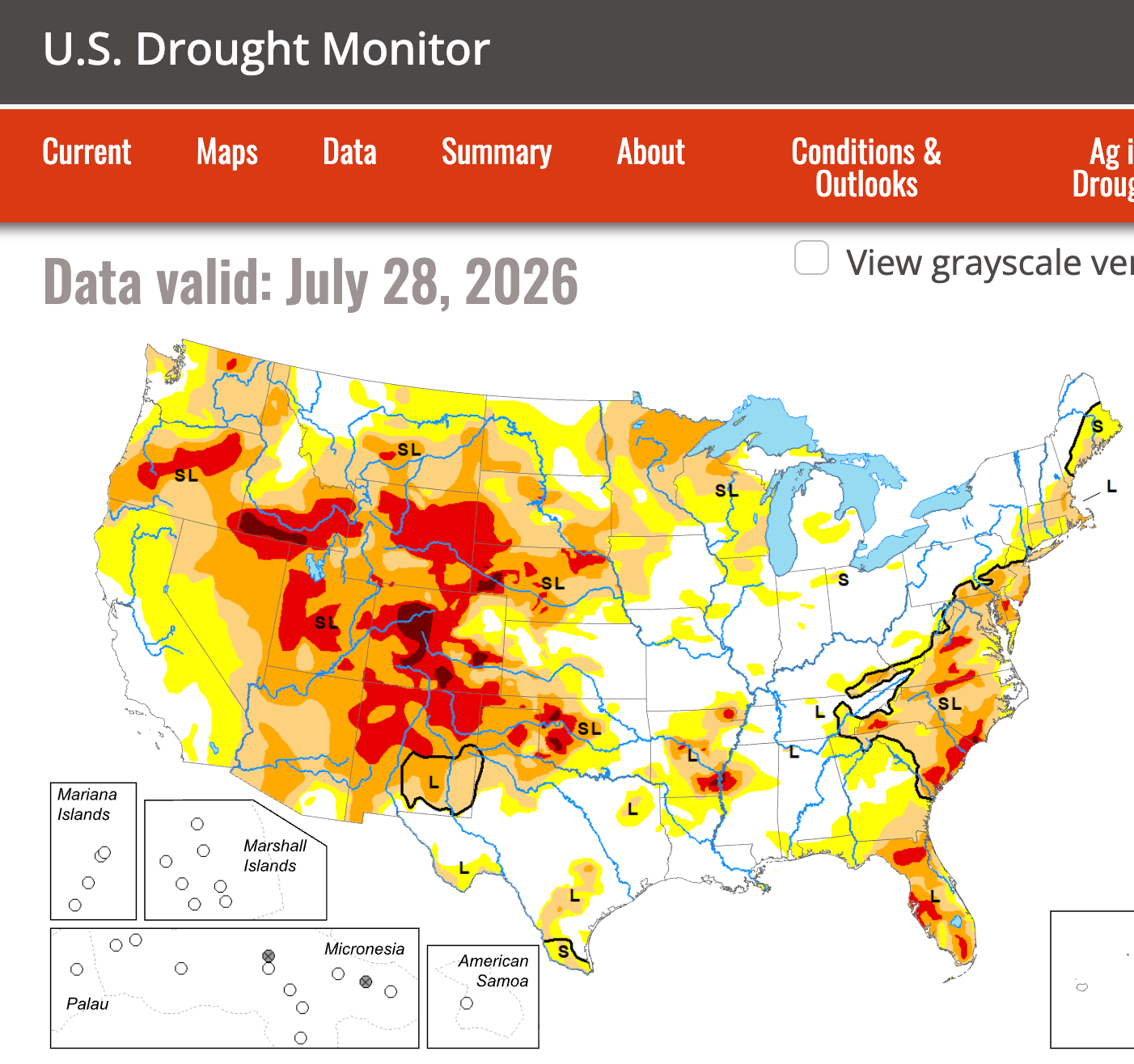
But the danger goes far deeper. The Colorado River starts here and six other states, as well as some of America’s biggest cities, depend on the river for their water. Right now, the flow is so low that at the two biggest dams in the Southwest, the Hoover Dam and the Glen Canyon Dam, there is a chance that soon, the water levels will be so low that they won’t be able to release it any more, let alone drive the turbines that produce hydroelectric power on which tens of millions depend.
So yes, if you feel like the world is unraveling, you are on solid ground. We can’t see the resolution of the many wars now being waged. Nor of the spreading influence of artificial intelligence. Nor of the dangerously low flow of water in the western United States.
Scary.